- The Curious Quill
- Posts
- The Guide to Self-Management

Ever feel like you're constantly reacting to your day instead of proactively shaping it? Do you aspire to be a top performer and leader but find yourself struggling to stay focused and productive? The truth is, success in any field—especially in leadership—hinges on one critical skill: self-management.
Why Self-Management is Your Superpower
Think about it: if you can effectively manage yourself, you become a manager's dream employee. But the real power of self-management shines through when you're in a leadership position, especially if your direct manager is a CXO. These individuals often have limited time for micromanagement. That's why the ability to take initiative, prioritize effectively, and manage your time and energy is paramount. When you master self-management, you become the captain of your own ship, steering your career toward success.
Self-management isn't just a "nice-to-have"—it's a necessity for anyone who wants to thrive.
I have been trying to absorb and learn multiple ways and come to the right place of peak performance. These notes come from my explorations around the topic.
From Stress Sponge to Strategic Leader: The Power of Self-Care
As a middle manager, you're often caught in the middle, absorbing stress from above and below. It's easy to feel like a "stress sponge." But here's the truth: you can't effectively lead others if you're not leading yourself first.
Prioritizing self-care isn't about being selfish; it's about being strategic. Your mental and physical state directly impacts your team's performance. As Kim Malone Scott, author of Radical Candor, wisely puts it:
"Hard times are harder when you're not your best."
"Work and life can give each other a 'double bounce.'"
Embrace the concept of work-life integration. It’s about finding harmony, not perfect balance. By taking care of yourself, you create the mental and emotional space to be a more effective and resilient leader. Dedicating even just 30 minutes a day to activities – like a quick workout or reading – makes a significant difference in your energy levels and overall productivity.
The Transformative Power of Observation: From Judgment to Discovery
Have you ever noticed the difference between feedback and observation? Traditional feedback, especially in professional settings, can often feel judgmental and trigger defensiveness. It's like walking on eggshells—difficult to deliver effectively and even harder for the recipient to process positively. When you offer critical feedback, the other person might feel like they're on trial, leading to resistance and a breakdown in communication.
Feedback often feels like a judgment, declaring a verdict: "You're doing this wrong."
Observation, on the other hand, is an invitation to explore: "I noticed this pattern. What do you think is happening?"
Observations spark self-reflection, turning the interaction into a collaborative treasure hunt. Instead of passing judgment, you're dropping clues, encouraging the individual to uncover insights for themselves. This distinction is crucial for effective self-management. Using this approach on yourself is even more powerful. Self-feedback is often harsh and demotivating. Self-observation is explorative and empowering.
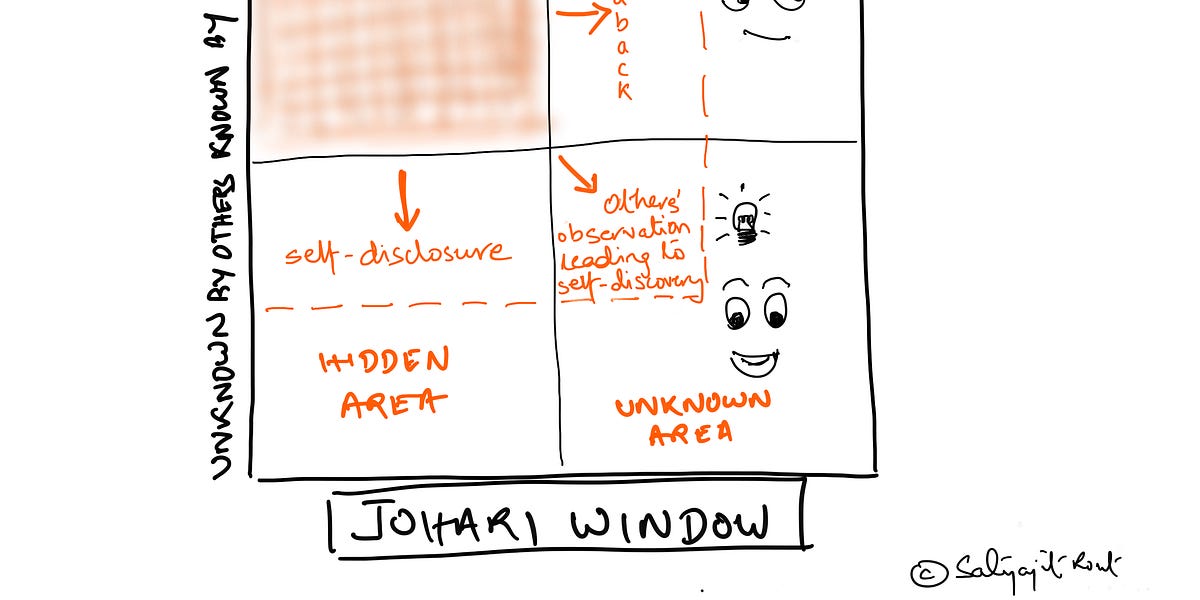
Think about the Johari Window. Observations help expand the "Known/Open" area in a way that feels empowering and less threatening. When you make self-discoveries, you're more likely to take ownership of your actions and feel confident about your growth.

Credit: Satyajit Rout’s Curiosity Chronicle
Question: How can you start incorporating more observation-based feedback into your interactions with yourself and others?
A Practical Approach to Balance & Harmony
Self-management is about strategically balancing your focus between immediate demands and long-term aspirations. Here's a framework you can adapt:
1. Goal Setting: Charting Your Course
Set clear, actionable goals for different timeframes – monthly, quarterly, and yearly. These could include:
Improving processes and governance.
Developing valuable assets (checklists, templates, etc.).
Identifying and mitigating risks.
Creating and reviewing action plans.
Building a robust knowledge base.
Even in the dynamic environment of a startup, having broad directional goals provides a sense of purpose and progress. The key question to ask yourself is: "Am I moving closer to my goals, even if incrementally?"
2. Time Blocking: Protecting Your Priorities
While flexibility is key, creating a loose structure for your week can ensure you're making progress on important tasks.
Example: Dedicate Monday mornings to team reviews and Friday afternoons to strategic initiatives.
Crucially, schedule dedicated time for self-observation. Regular self-reflection allows you to recalibrate your efforts and ensure you're staying on track. Block out an hour each week for this practice, and it can make a huge difference in your ability to stay focused and adapt to changing priorities.
Key Takeaway: Treat your time as your most valuable asset. Time blocking helps you allocate it intentionally, ensuring you're not just reacting to the urgent but also proactively working towards the important.
Peter Drucker's Timeless Wisdom: Mastering Yourself
Peter Drucker's seminal work, Managing Oneself, provides enduring principles for personal effectiveness. One of his key strategies is feedback analysis:
Document Expectations: Before making a significant decision, write down your expected outcomes.
Analyze Results: 9-12 months later, compare your actual results to your initial expectations.
Identify Patterns: This process helps you pinpoint your strengths and areas where you might be overestimating your abilities.
Drucker also offers these powerful guidelines:
Focus on and develop your strengths. Identify tasks where you consistently excel or feel energized. Seek opportunities that align with these strengths and deliberately practice to deepen your expertise.
Address knowledge gaps. Proactively seek resources or training to close gaps in your understanding. Small, consistent efforts to address these gaps can have a significant impact over time.
Understand your learning style. Are you a reader or a listener? Tailor your learning methods to your natural preference for maximum effectiveness. For instance, if you're a listener, incorporate podcasts or audiobooks into your learning routine.
Adult development theory, pioneered by Robert Kegan and further developed by David Rooke and William Torbert in their HBR article "Seven Transformations of Leadership," reveals that we continue to grow and evolve through predictable stages as adults. Each stage presents unique challenges and opportunities for growth.
Here's a brief overview of the seven stages of leadership development from their research:
Opportunist: Focuses on personal gain, often at the expense of others. (Tip: Practice empathy and helping others.)
Diplomat: Prioritizes harmony and avoids conflict. (Tip: Develop assertiveness and communicate your needs clearly.)
Expert: Relies on logic and expertise, sometimes dismissing others' opinions. (Tip: Be open to different perspectives and acknowledge others' contributions.)
Achiever: Goal-oriented and understands people, but may lack innovation. (Tip: Embrace creative problem-solving and think outside the box.)
Individualist: Adapts their approach to different individuals but may disregard established procedures. (Tip: Learn to collaborate effectively within existing frameworks.)
Strategist: Builds shared vision and brings people together. (Tip: Develop a network of allies who challenge your thinking.)
Alchemist: Excels at both short-term and long-term goals and has strong rapport with their team. (Tip: Focus on building relationships with everyone in the organization to foster loyalty.)
As Marshall Goldsmith famously stated, "What got you here won't get you there." Your past successes may not guarantee future success. Continuous growth requires evolving your perspective and adapting your approach.
The Core Ingredients for Self-Management Mastery
Let's distill the key elements for effective self-management:
Discover Your Strengths: Use feedback and observation analysis to identify your unique talents and align your work accordingly.
Ask Powerful Questions: Regularly reflect on your performance, your ideal work environment, and the value you bring.
Plan with Purpose: Set challenging yet meaningful goals for the next 18 months to provide direction and focus.
Foster Effective Relationships: Clearly communicate your strengths, values, and contributions to your collaborators, and expect the same in return.
Embrace Observation: When guiding yourself and others, prioritize observation over judgment to foster self-discovery and ownership.
Key Takeaways
Self-management is the foundation of personal and professional success.
Observation is a powerful tool for self-reflection and growth.
Continuous learning and development are crucial for navigating different career stages.
Self-management is a journey, not a destination. It requires ongoing effort, self-awareness, and a willingness to adapt. By embracing the principles outlined in this newsletter, you can take control of your career and unlock your full potential. Now go out there and start leading yourself with intention!
References
Radical Candor by Kim Malone Scott
Managing Oneself by Peter Drucker
"Seven Transformations of Leadership" by David Rooke and William Torbert (Harvard Business Review)
What Got You Here Won't Get You There by Marshall Goldsmith