- The Curious Quill
- Posts
- On Leverage
On Leverage

Dileep Karri
January 11, 2023
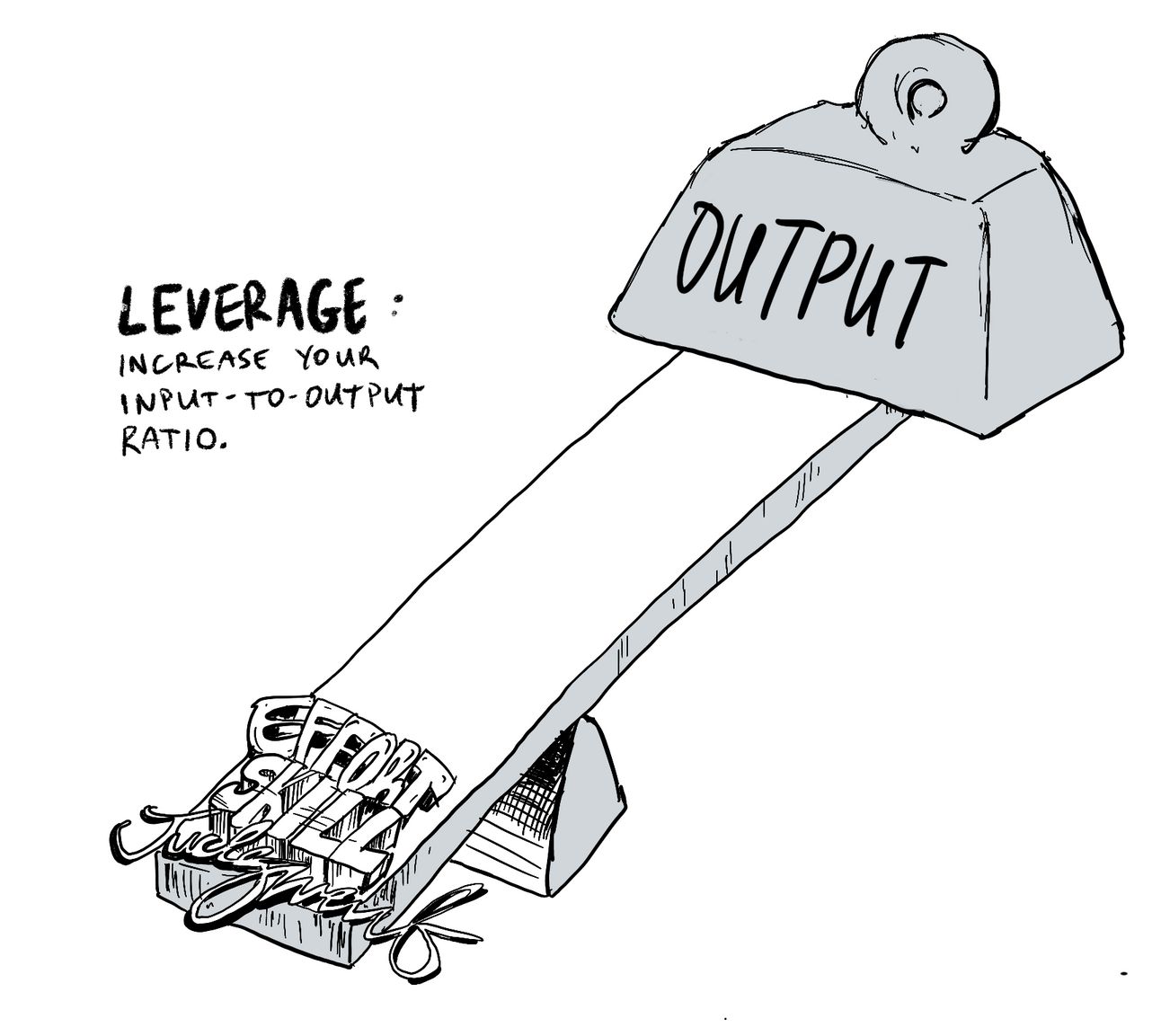
Courtesy: Andrew Yu
Leverage is a concept in Physics where we achieve impact much more than the effort we put in. It is a force multiplier for effort, skill, and judgment, enabling significant accomplishments.
We can see levers for impact in many places - a standard operating procedure and script for sales make it easy to scale the sales process. Infinite leverage allows anyone with a laptop to build and scale projects.
In the knowledge economy, small changes in individual performance can have a lot of effect on productivity. One idea done well could change the company's trajectory. For leverage to work, there must be a reasonable estimate of value and impact. Knowing when you have leverage and where to apply it is an important skill.
Leverage sometimes has a dark side and could lead to exploitation. Knowing when to hold back leverage is part of ethical considerations.
Types of leverage for early employees:
High Leverage
These activities have a multiplier effect on the organization, including setting goals for the team and enabling them to execute them successfully. This is the area most of us must operate.
Low Leverage
The work done here is one-time and has no multiplier effect. Micromanagement comes under low leverage.
Negative Leverage
Anything that sucks up productivity is negative leverage. Setting up unnecessary meetings, putting people down, etc., are harmful activities.
Tips to build leverage
Follow intellectual curiosity rather than trends.
Avoid risks that could lead to total loss.
Pay it forward when possible.
Reference:
The Great Mental Models, Vol 2., Shane Parrish
The Age of Infinite Leverage by Visualize Value